

 Polski
 Deutsch
 Türkçe
 Français
 Español
 Suomi
Suomi
 Bokmål

e-Delivery (Q-Delivery) Is Coming to Our Homes (QWAC)
e-Delivery (Q-Delivery) Is Coming to Our Homes (QWAC)
Across Europe, more and more countries are implementing e-Delivery systems – electronic document delivery services with the same legal force as traditional registered mail.
The Qualified Electronic Registered Delivery Service, known as e-Delivery (Q-Delivery), is officially referred to as QERDS – short for Qualified Electronic Registered Delivery Service.
What is e-Delivery?
e-Delivery is a service that:
-
provides proof of sending and receiving electronic documents,
-
protects the content of the message from tampering during transmission,
-
meets the eIDAS regulation as a qualified trust service in the EU.
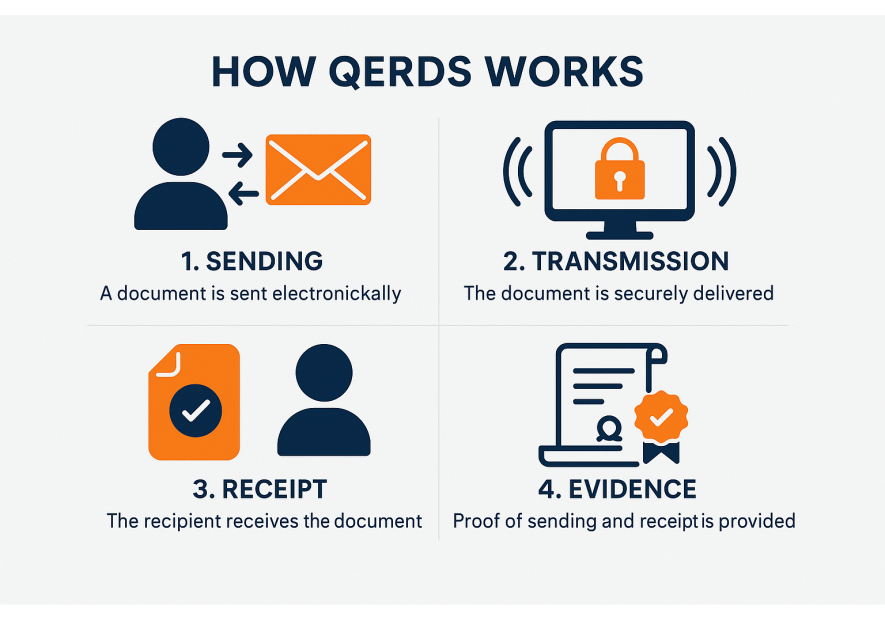
How QERDS Works – At a Glance:
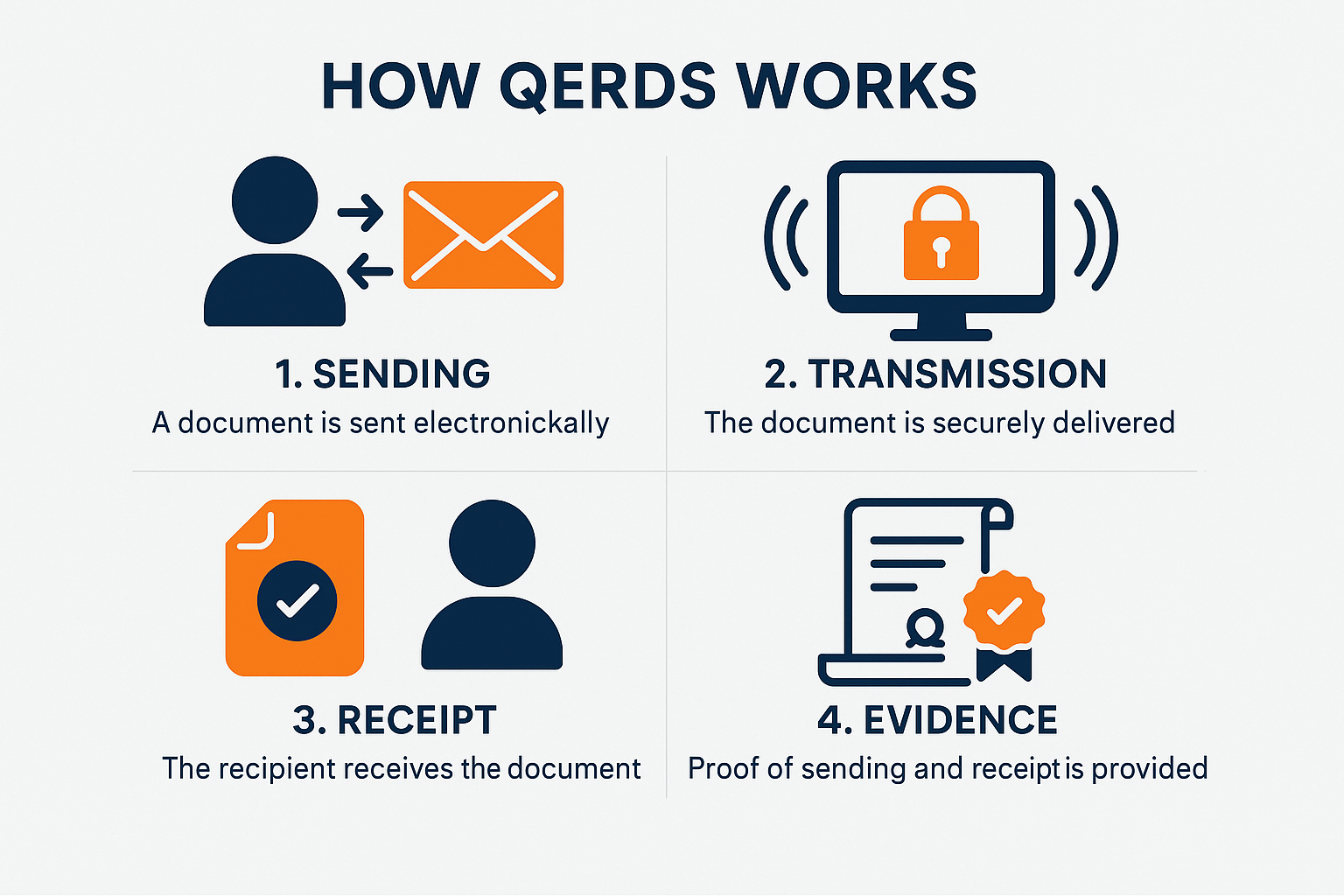
A document delivered via QERDS:
-
has the same legal validity as a registered letter with acknowledgment of receipt,
-
can be used in court as evidence of dispatch and delivery.
Examples of e-Delivery Implementation in Europe
Although there is no unified implementation list, many EU and EEA countries are deploying these systems in accordance with eIDAS:
-
Denmark: EHMI (Enhanced Healthcare Messaging Infrastructure) – a secure channel for the healthcare sector.
-
Slovenia and Norway: Implementing systems aligned with European interoperability standards.
-
Poland: Mandatory use of e-Delivery for public administration postponed until January 1, 2025.
-
Greece: Mandatory e-Delivery from April 1, 2025 (for companies with revenue over €200,000), and from October 1, 2025 for all other companies.
-
Italy: Uses the PEC system for years – now undergoing qualification as a QERDS.
-
Germany, France, Belgium: Developing solutions in line with PEPPOL and QERDS.
e-Delivery Status in Poland (as of 2025)
e-Delivery is a nationwide electronic communication system with legal force equivalent to registered mail. It is part of implementing QERDS under eIDAS.
Implementation stages and key dates
|
Date |
Stage |
|---|---|
|
October 1, 2021 |
e-Delivery Act came into force (Journal of Laws 2020, item 2320) |
|
July 5, 2022 |
Launch of the central e-Delivery system |
|
July 1, 2022 |
Voluntary registration for public entities begins |
|
December 10, 2023 |
Mandatory use for most public administration bodies |
|
December 30, 2023 |
Mandatory for ZUS, KRUS, courts, prosecutors |
|
January 1, 2024 |
Mandatory for new public entities and regulated professions |
|
October 1, 2024 |
Mandatory for newly registered companies in KRS |
|
April 1, 2025 |
Mandatory for all entities registered in KRS |
Legal basis and requirements
-
e-Delivery Act of November 18, 2020 (Journal of Laws 2020, item 2320)
-
System utilizes a qualified QERDS service
-
Requires use of QWAC (Qualified Website Authentication Certificate)
-
Each company/institution has an Electronic Address listed in the e-Delivery Address Database (BADE)
Who is affected?
|
Entity |
Obligation status |
|
Government bodies, ZUS, courts |
✅ Mandatory |
|
Notaries, bailiffs, lawyers, legal advisors |
✅ Mandatory |
|
Companies registered in KRS (after 1.10.2024) |
✅ New – Mandatory |
|
Companies in KRS (registered before) |
✅ Mandatory from 1.04.2025 |
|
Sole proprietorships, individuals |
❌ Voluntary (for now) |
Technology
-
The system operates via REST API/SSL – requires QWAC certificate (e.g., from Certum, Eurocert, Szafir)
-
ePUAP 2.0 mailbox is available for individual users
QERDS providers in Poland (May 2025)
-
Poczta Polska S.A. (designated operator)
-
Envelo (Speedmail)
-
EuroCert
-
Asseco Data Systems (Certum) – via eSZD platform
